

The BAYADA Regatta is one of the largest and longest-running all-adaptive rowing events in the world.
Event Day Information
All rowers, clubs, BAYADA employees, families, clients, and community members are welcome to attend this free event!
Camden County Boathouse | 7050 N Park Drive, Pennsauken Township, NJ 08109
Classification: 9:00am-2:00pm
Holiday Inn Philadelphia-Cherry Hill | 2175 Marlton Pike, Cherry Hill Township, NJ 08002
Jolly-Up Dinner: 6:00pm-9:00pm
Coaches & Directors Meeting: 7:00pm-9:00pm
Camden County Boathouse | 7050 N Park Drive, Pennsauken Township, NJ 08109
BAYADA Regatta race events: 9:00am-3:00pm
Rowers must be near the dock 60 minutes prior to their race time.
Rowers/Clubs Only: The celebration dinner/banquet will take place immediately following the last race in the Camden County Boathouse banquet room.
Holiday Inn Philadelphia-Cherry Hill by IHG (Rowers and Clubs)
2175 Marlton Pike, Cherry Hill Township, NJ 08002
Hotel amenities: Accessible rooms, fitness center, full kitchen, service dog friendly, on-site restaurant, on-site parking, wi-fi
Room Rate: Discounted Group rate of $119 per night.
Group Rate for BAYADA Regatta
Reservations can be made by calling the Hotel Reservations Department at [877] 213-6799 before the cut-off date 09/12/2026. Please reference the BAYADA Regatta to receive the discounted group rate. All reservations must be guaranteed with a major credit card.
Shuttle information will be forthcoming
Rower and Volunteer Information
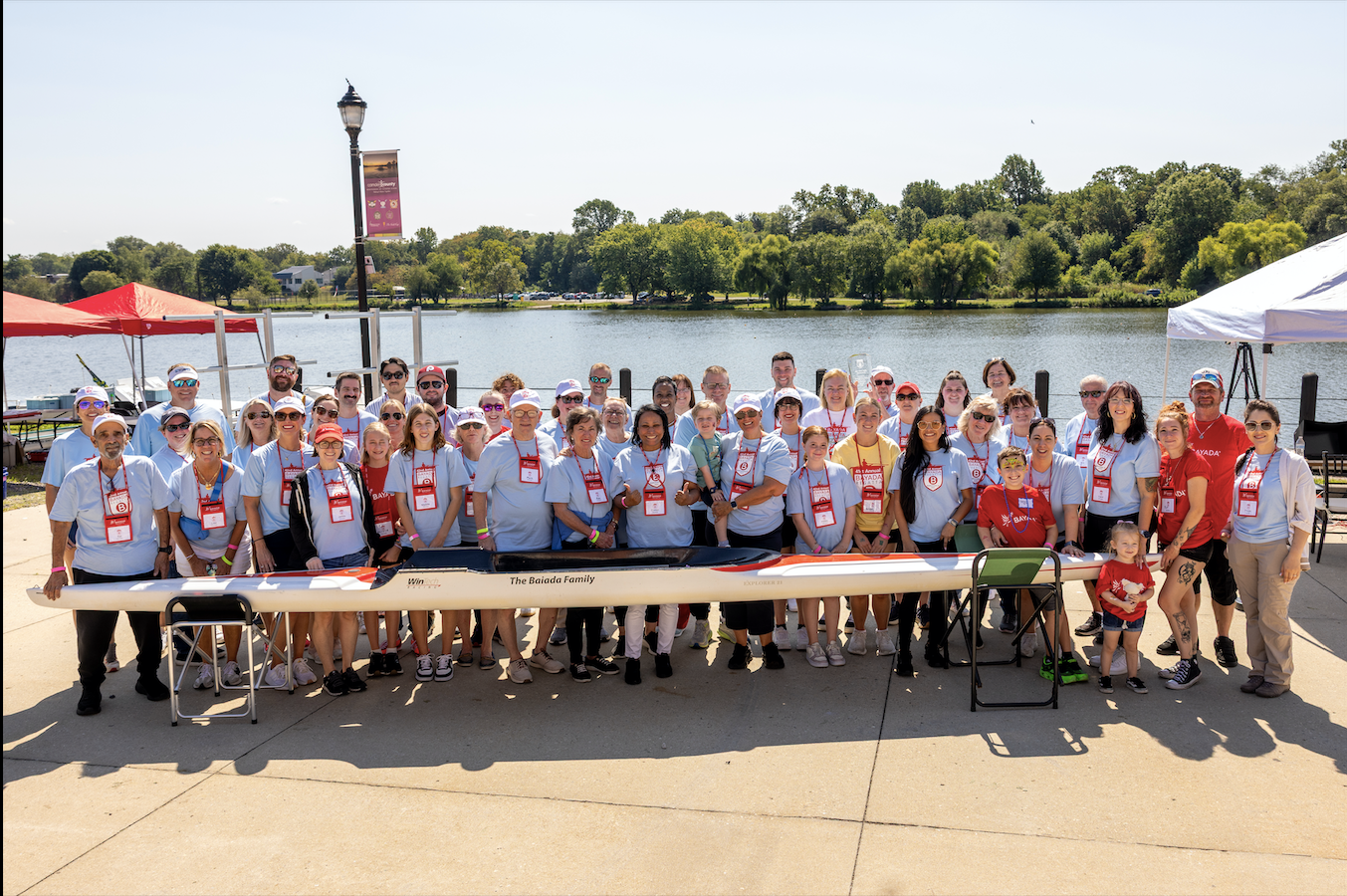
Employee Volunteers
Please consider volunteering and spending the day on the river at the Camden County Boathouse
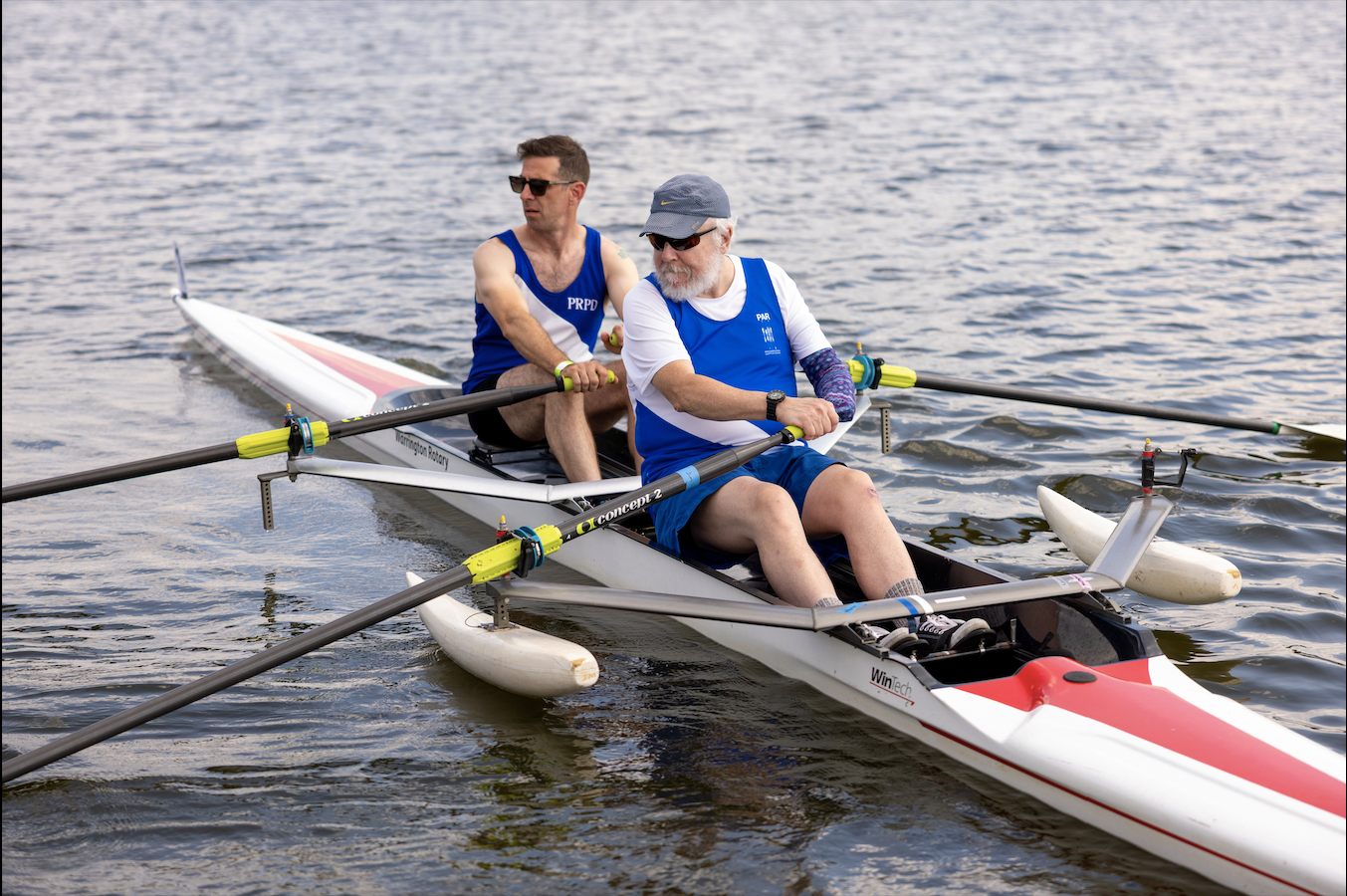
Adaptive Rower and Club Support Registration
On the day of the BAYADA Regatta, races begin promptly at Camden County Boathouse on the Cooper
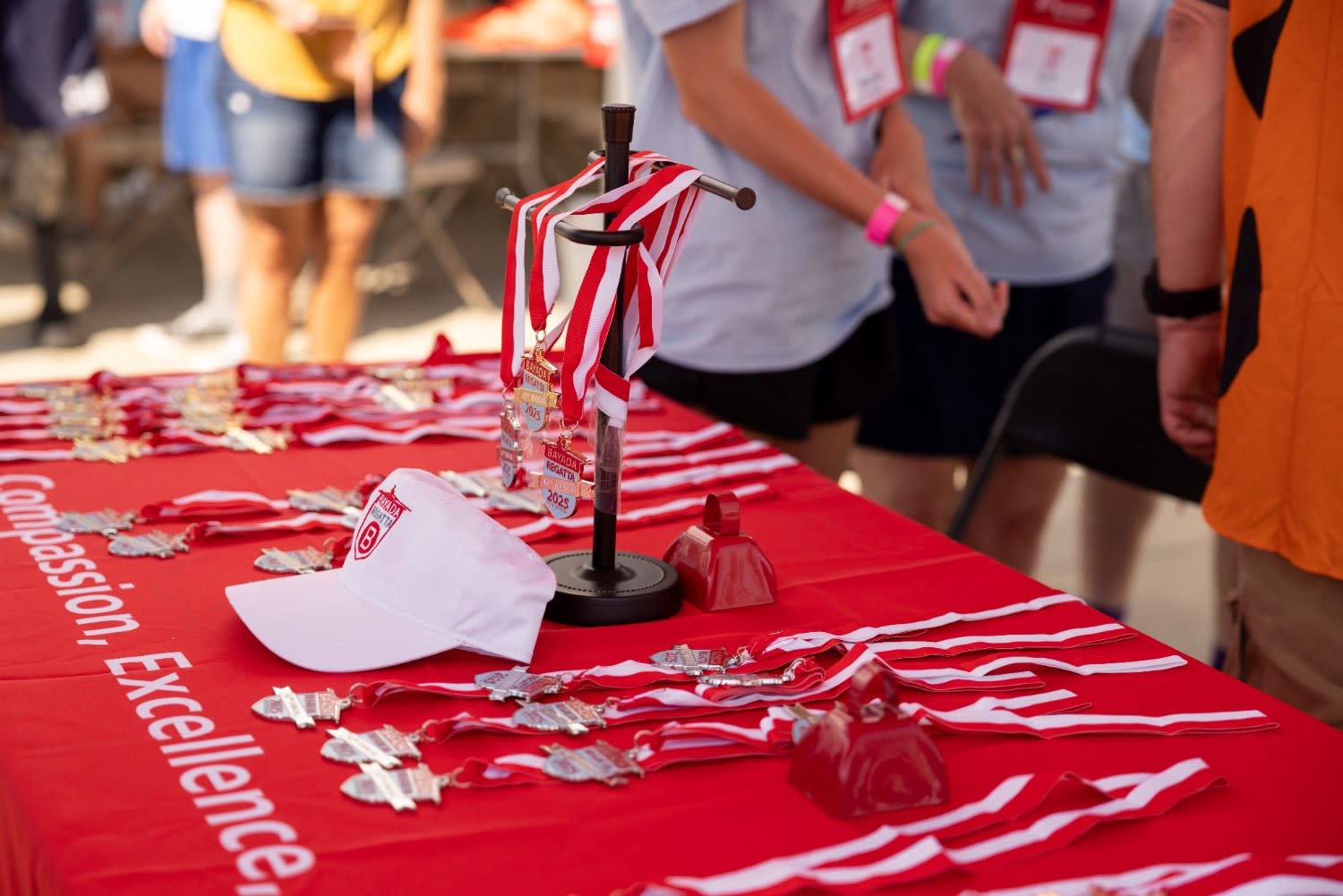
Donation Information
Looking to donate to support this year's BAYADA Regatta? Note: clicking the link below will open a new tab.
History of the BAYADA Regatta
PAR serves as the host club for the BAYADA Regatta. Situated along the Schuylkill River in Philadelphia, PAR’s boathouse stands upriver from Boathouse Row.Volunteers contribute their time and support to ensure the smooth functioning of PAR’s operations. PAR is a Pennsylvania Center for Adapted Sports program committed to fostering inclusivity and accessibility in sports.
History
Established in 1980, PAR is the birthplace of adaptive rowing in the United States. Their groundbreaking efforts played a pivotal role in securing the inclusion of adaptive rowing in the Paralympics while also assembling the first-ever US adaptive rowing team to compete in the World Rowing Championships held in St. Catharine’s, Canada.
PAR’s legacy of elite athletes includes Scott Brown, six-time World Champion and Paralympian. Also from PAR, Bronze medal Paralympian Laura Schwanger, former National Team members Jim Falls, Lisa Boron, and Hugh Gallagher. PAR’s program buzzes with activity, drawing in over 25 dedicated rowers who engage in recreational and competitive rowing.
Rockland Rowing Association’s adaptive program has been meeting the needs of people with physical, cognitive, and developmental disabilities in New York City’s northern suburbs of Rockland, Westchester, and Bergen counties since 2015.During our season from May through October, rowers enjoy fellowship, teamwork and the joy of physical freedom outdoors on Rockland Lake. All programs are offered at no cost to participants.
History
Founded with the support of Helen Hayes Rehabilitation Hospital, we also work with community partners including US Rowing’s United We Row program, the Rockland County's Youth and Disabilities Bureaus, VISIONS Center on Blindness, Living Resources, Venture Together NY, and Burke Rehabilitation Hospital.
Rower Testimonials

“When I’m on the water, I’m like everyone else. I’m no longer disabled—I can do anything!”
Patrick W.
Miami Beach Rowing Club
“Being Deaf has its challenges but it will not stop me from picking up an oar and row! I really love rowing!”
- Lisa C
Unaffiliated
“I knew it was the end for me, or so I thought. Turns out, I could compete against people similar to me, at a similarly advanced competitive level, just a bit more fair.”
Sam W.
Bachelor’s Barge Club
“I love that there’s always something to improve. It feels like putting pieces of a puzzle together.”
Maria S.
CARP
“My favorite part of para rowing is the independence it gives me and people like me.”
Scott B.
Brooks Adaptive Rowing
Rower, Boat, and Race Classification
Please read all information thoroughly, including all rules and regulations.
Please click the button below to download and print the full document.
For more information, please email Sandy Brown at [email protected]
For safety reasons, due to the number of participants and equipment, access to the boat dock and boat staging area (“rowing area”) is for rowers and volunteers only. Family members are not permitted in the rowing area.

Your Sponsorship Supports BAYADA’s Impact
Sponsorship opportunities are available at every level, with recognition on the BAYADA website and on-site at the Regatta—visible to hundreds of attendees. As a charitable donation, your support directly benefits the meaningful work we do at BAYADA.
2025 BAYADA Regatta Sponsors | Refreshment Partners


Shell Sponsors


Adaptive Rower and Club Support Registration
All rowers and club members supporting the event must register.
Saturday
The night before the BAYADA Regatta, athletes are invited to a pre-race meeting and Jolly-Up. The Jolly-Up is an informal cocktail party and festive event that is an opportunity to get-together before the races.
Sunday
Races begin promptly at 9 am at the Camden County Boathouse on the Cooper River.
Admission to the event is free, so invite friends and family to come out and cheer you on.
After the races are complete on Saturday, you are welcome to stay and attend a picnic celebration with food, fun, music, and the special presentation of the Leo Reilly Award.
We can’t wait to see you on the river!
1x (single) para-rowing scull: one para rower
1000m para-rowing
For PR3-VI rower, they must have an accompanying guide boat for safety
500m novice
2x (double) para-rowing scull: two para rowers
1000m para-rowing (both rowers are classified para rowers PR1, PR2, PR3-PI, PR3-VI*, II1*
*For safety reasons, if a boat consists of two PR3-VI rowers or two II1 rowers, these boat lineups must be approved by the BAYADA Regatta Race Committee
2x (double) inclusive skull: one able-bodied rower and one para rower
* The stroke of the able-bodied partner must match the stroke of the para rower throughout the duration of the race or the boat and rowers will be disqualified.
1000m inclusive (able-bodied rowing partner in bow)
500m novice inclusive (class 1 Alden Ocean Shell boats only)
4+ para-rowing sweep: one coxswain and four para rowers
1000m para-rowing (all rowers are classified para rowers PR3-PI, PR3-VI, II1 with no more than 2 male rowers)
This event must have an entire crew who has rowed together for at least 50 miles
The following are the equipment requirements for the BAYADA Regatta. There will be USA Technical Classifiers on the dock checking equipment as you boat out. If your equipment is determined to be ineligible, you will be disqualified from the event.
PR3 and ID Sliding seat -Standard Equipment, Pontoons Optional
PR2 Fixed seat - Fixed Seat, Pontoons and support straps optional
PR1 Fixed seat - Fixed Seat, Pontoons (no height restriction) and Support Chest Strap Required. Lower lumbar must be in touch with seat back
Straps - min 10 cm wide, quick release, no mechanical buckles, contrasting color to uniform
Pontoons - 60 cm from centerline of pontoon to centerline of boat
Contacts and Resources for the BAYADA Regatta
Race questions, classification issues, and equipment needs: Sandy Brown
Email [email protected]
Athlete classification questions and paperwork: Deb Arenberg
Email [email protected]
Questions or Information on volunteering: PAR
Email [email protected]
Questions or Information on Volunteering: BAYADA
Email [email protected]
Questions about adaptive rowing or PAR: Jeff McGinnis
Email [email protected]
Media inquiries: BAYADA Communications office
Email [email protected]
Telephone 856-273-4600
Public transit and Paratransit information
More information on paratransit service from Septa

Is BAYADA near me?

What services do you offer?
Our Services
Autism & ABA Therapy
Companion Care
Habilitation
Home Health
Hospice
Pediatrics
Personal Care
Adult Private Duty Nursing
About BAYADA
The BAYADA Way
About BAYADA
Connecting with Purpose
50ᵗʰ Anniversary
Diversity
Donate
Regatta
International Care
Contact Us
Client Resources
Pay My Bill
How to Pay for Home Care
Privacy Notice for Clients
Online Privacy Policy
Ethics and Safety
Compliance
Report a Concern

© BAYADA Home Health Care, 2025. All Rights Reserved.
BAYADA is accredited by Community Health Accreditation Partner for meeting the industry’s highest nationally recognized standards of care. Manage Cookie Preferences
Handicap-accessible parking is available on the right-hand side of the boathouse.
Parking is available along N. Park Drive.
Trailers can be parked on the street or in the parking lot on the left-hand side of the boathouse. Trailers can be dropped off on Sunday, September 27th at the boathouse.
Volunteer and spectator parking is available in the large parking lot on the left side before the Camden County Boathouse – a sign will be available that says Regatta Parking.
North Star Community Rowing is excited to make its Bayada Regatta debut, marking a significant milestone since its founding in 2016. With the generous support of adaptive equipment grants from the BAYADA Foundation, North Star Community Rowing fulfills its mission of changing lives through the sport of rowing as it works to create a more equitable and inclusive rowing community.
History
As a USRowing Freedom Rows organization, North Star provides inclusive and accessible rowing programs for adaptive athletes, Veterans, and community members in the Minneapolis/St. Paul area.
Veterans, first responders and those with challenges including (but not limited to) PTSD, loss of limb, loss of vision, autism, multiple sclerosis, cerebral palsy, bi-polar disorder, cancer and addictions experience the peace, joy, excitement, gratitude and accomplishment of being on the water and of belonging to a rowing community.
History
Co-founders Tim Giarrusso and Dennis Fronheiser have dedicated themselves to creating the first inclusive, adaptive, sculling center in the country, where no one pays and no one gets paid.
The mission of Rochester Community Inclusive Rowing (RCiR)is to create a supportive, inclusive and fully accessible environment for Veterans and people with any challenge who want to come to the water and learn to row, at no cost to them.
DSC’s athletes and coaches cross the continent almost every year to participate in the BAYADA Regatta. This year’s entries include Rachel Tappero, who received the Leo Riley Award last year for her “outstanding spirit and determination” as a rower, and Ana Gabriela Moreno, a former Mexican Paralympic swimming and wheelchair racer. They will row in the PR2 and PR1 single events, respectively, and Gaby will also compete in an inclusive 2x race with Carmen Matty Cervantes. Elise Hill will miss this year’s regatta because she will be in the first ever PR3 quad at World Rowing’s Coastal Rowing Championships in Genoa, Italy.Our 11 dedicated volunteers, including two veterans from our Freedom Rows program, help us sustain the only adaptive rowing program in California’s Central Valley.
History
Founder Pat Tirone joined her passions as a sculler and physical therapist to help people with physical, neurological and other challenges find peace, fitness and camaraderie on the water.
Delta Sculling Center, founded 11 years ago in Stockton, California, makes sculling accessible to everybody. DSC currently serves two PR1, one PR2, and seven PR3 scullers, including several military veterans, and Wounded Warriors who occasionally visit from 2 ½ - 4 hours away.
PR1: Physical Impairment. This sport class is for athletes who row predominately with their arms and shoulders. Athletes use strapping around their mid section to provide support and stability in the boat.
PR2: Physical Impairment. This sport class is for rowers who have trunk and arm movement, who are unable to use their legs to propel the sliding seat.
PR3: Physical Impairment (PR3-PI) or Visual Impairment (PR3-VI) This sport class is for rowers who have the use of their legs, trunk and arms, who can utilize the sliding seat.
II1: Intellectual Impairment. Documented full scale IQ score of 75 or lower (on WAIS, WISC, Stanford Binet) with significant limitations in at least one domain area of adaptive behavior (Vineland, ABAS, or AAMR) onset before age 22.
The following classifications may be allowed to compete on a limited basis. BAYADA Regatta Race Committee must review and approve all entries in the categories below. No self-classification is accepted:
II3: High functional autism (autism diagnosis with IQ score of 76 or higher)
PR3-RA: Requires accommodation. Cannot safely row a single shell independently. Must be approved through USRowing, Athletes Without Limits or Freedom Rows.
All athletes competing in the BAYADA Regatta with a physical impairment must have an official U.S. or International sport classification. Paperwork is due 30 days prior to classification for review (August 13). Email to: [email protected]
USRowing Para Classification Information
Medical Documentation Form for Physical Impairment (REQUIRED)
Medical Documentation Form for Visual Impairment
FISA Para-rowing Classification
Athletes with a Visual Impairment must be assessed, and medical document signed by an ophthalmologist (only). Paperwork (Form- VI Impairment) must be emailed to [email protected] and the athlete is not required to attend an Athlete Classification session.
Athletes with a Physical Impairment who require classification must email their paperwork (Form - Physical Impairment) and supporting medical documentation to [email protected] for review of the eligible impairment 30 days prior to the event (August 13). The Classification is performed by a U.S. Medical and Technical Classification Panel and takes approximately 45 min. Athlete Classification is scheduled by appointment the Friday before the BAYADA Regatta at the host hotel. Please email the Regatta Chief Classifier to confirm a time slot: [email protected].
Athletes with an Intellectual Disability (ID) must be listed on the Master Classified Athlete List - http://www.athleteswithoutlimits.org/eligibility. As this is a lengthy process it is recommended the athlete begin this process a minimum of 6 months prior to competition.
Class consolidation and averaging Rowers without competition in their class will be moved into the next higher class as determined by the regatta committee. There must be a minimum of two entries per race for an event to take place. Entries without competition in their division will be moved into the other division, as determined by the regatta committee. In the event of two differently classified rowers in one boat, the boat will be entered into the higher classed event (i.e. a PR2 and a PR3 rower in the same boat will be entered into an PR3 event). In the event of male and female rowers in the same boat, unless the race is specifically a mixed event, the boat will be entered into a male event.
In keeping with the standardization process of competition, the BAYADA Regatta will use a universal Boat Type Classification system. Your coach can help you determine which boat class you will be competing in. Some boats are provided, but it is best to bring your own boats and equipment.
The following are the boat type classifications used in the BAYADA Regatta:
BOAT TYPE 1: Primarily used in recreational events, type 1 boats are typically for novice rowers who are competing in their first regatta, or generally compete only once a year. All competitors must row in Alden Ocean Shells or the equivalent.
BOAT TYPE 3: Primarily used in para-rowing events, type 3 boats are for more competitive rowers who compete more than once a year and/or have competed in multiple regattas. These rowers must adhere to strict FISA requirements especially in regard to required equipment adaptations. All competitors must row in WinTech, Swift, Alden Star, Filippi or the FISA approved equivalent.
In keeping with para-rowing tradition, every effort is made to have equipment available to all rowers. However, we cannot guarantee availability of specific rigging. In the event that preferred equipment is not available or in the event of a shortage and substitutions must be made, the dock master will have the final decision.
Para-rowers will have first pick of equipment over non-disabled rowing partners. We ask that visiting teams bring their own equipment, as we have a limited amount at Philadelphia Para-Rowing. All visiting teams are asked to make their equipment available to the other rowers.
All para-rowing and inclusive races will be 1000m.
All novice races are 500m.
When signing up for more than one race, you must leave at least two races between your picks.
Times of races have not yet been determined; however, race director and dock masters will make every attempt to accommodate all requests.
We do not guarantee that rowers will compete more than one time.
This is a para-rowing event. Recreational and Inclusion races are offered to only those participants that are physically unable or do not demonstrate the skill to row in a single shell or with another adaptive athlete. They must row with a non-disabled partner.
Support and Inclusion rowers are not permitted to participate in para events.
Participants are responsible to know their race times. Race times will be available during the Jolly-Up the night before the BAYADA Regatta. Races will not be delayed and could be earlier than scheduled. An entry may be scratched due to rower tardiness.
Rowers must be near the dock 60 minutes prior to race time.


